https://www.gov.uk/government/publications/covid-19-stay-at-home-guidance

Thursday, 24 September 2020
System of controls
This is the set of actions early years settings must take. They are grouped into ‘prevention’ and ‘response to any infection’.
Prevention
1) Minimise contact with individuals who are unwell by ensuring that those who have coronavirus (COVID-19) symptoms, or who have someone in their household who does, do not attend settings.
2) Use of face coverings.
3) Clean hands thoroughly more often than usual.
4) Ensure good respiratory hygiene by promoting the ‘catch it, bin it, kill it’ approach.
5) Introduce enhanced cleaning, including cleaning frequently touched surfaces often using standard products, such as detergents and bleach.
6) Minimise contact between groups where possible.
7) Where necessary, wear appropriate personal protective equipment (PPE).
Numbers 1 to 5 must be in place in all settings, all the time.
Number 6 must be properly considered, and settings must put in place measures that suit their particular circumstances.
Numbers 7 applies in all specific circumstances.
Response to any infection
8) Engage with the NHS Test and Trace process.
9) Manage confirmed cases of coronavirus (COVID-19) amongst the setting community.
10) Contain any outbreak by following local health protection team advice.
11) Notify Ofsted.

Washing hands...
INTENT
During the COVID 19 pandemic we want to ensure we are keeping children and people around us safe, Good hand
hygiene is the best
way to prevent the spread of germs so we used this technique to educate the children on the importance of hand washing and
the steps for proper hand washing to
prevent the spread of germs.
IMPLEMENTATION

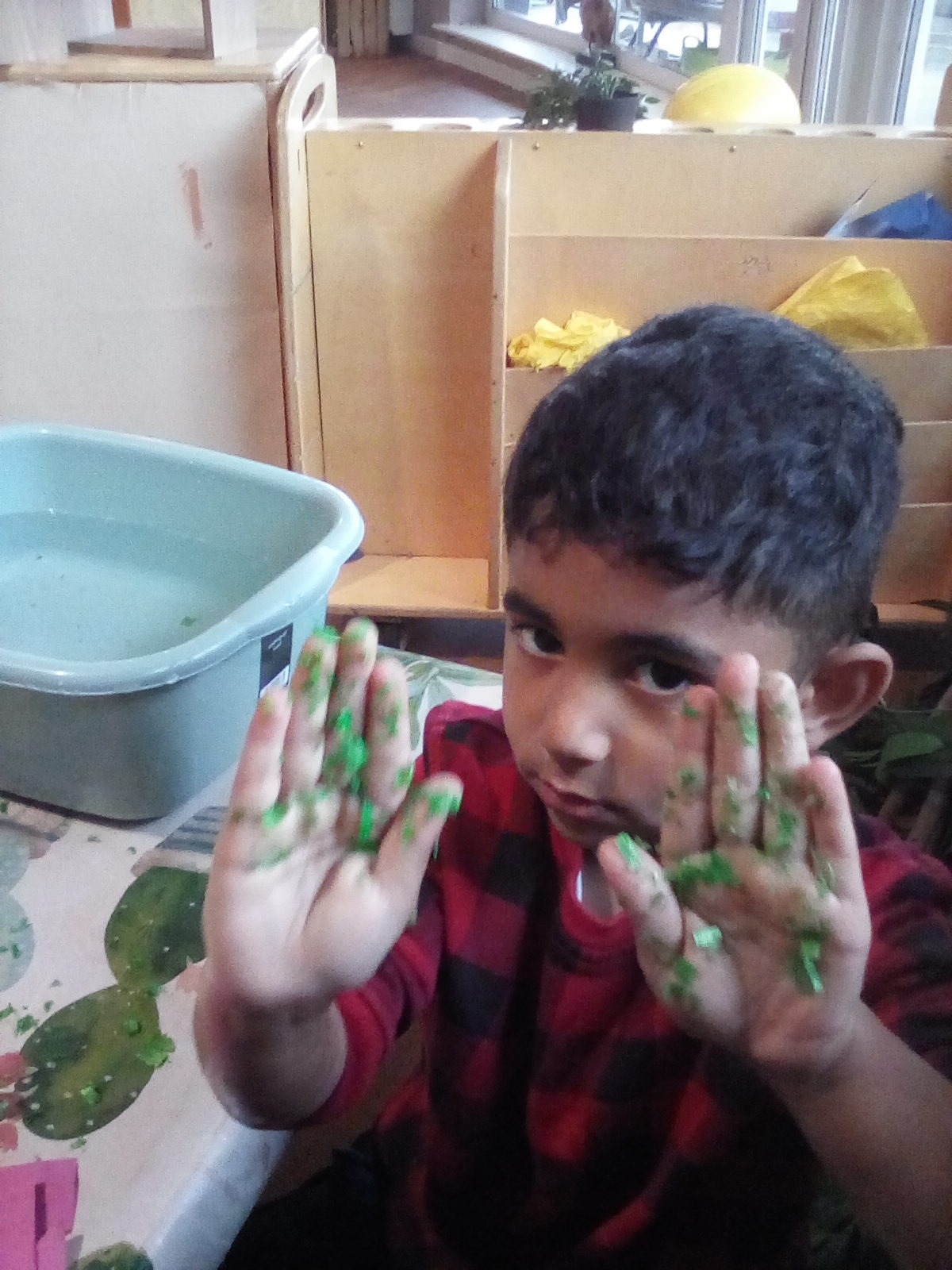


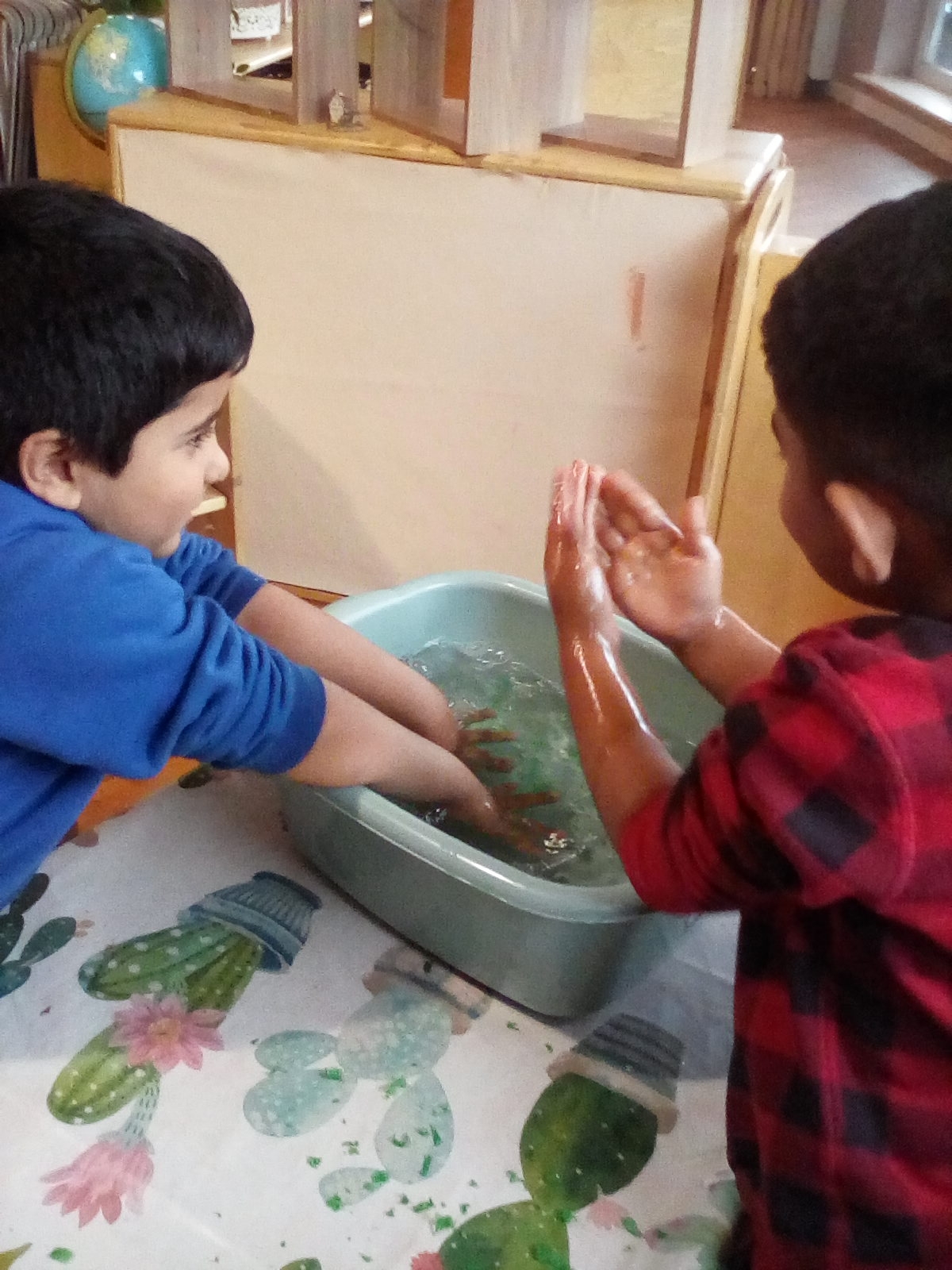


IMPACT
•Maintaining focus on their activity for a period of time
•Paying attention to details
•Being proud of how they accomplished something – not just the
end result
PHYSICAL DEVELOPMENT
•Can usually manage washing and drying hands
•Shows some understanding that good practices with regard to
exercise, eating, sleeping and hygiene can contribute to good health.
COMMUNICATION AND LANGUAGE
•Beginning to understand ‘why’ and ‘how’ questions.
•Responds to simple instructions, e.g. to get or put away an
object.
•Uses simple sentences
IMPORTANT MESSAGE...

Tuesday, 22 September 2020
IMPORTANT NOTICE!
Dear Parents,
Please may I reminded you that to keep our staff, their families, the children and their families’ safe, we are relying on parents to follow the government rules and inform us of;
- A member of the household showing signs of COVID
- A member of the household receiving confirmed positive for COVID
- A child displaying signs of COVID
- A child being tested for COVID
- Awaiting a result of a test for COVID
- A positive or negative result from a COVID test
We have some children and staff family members who are clinically vulnerable and the above information could prevent staff and children from St Mary’s spreading the virus to these people and the community.
Failure to follow these rules will result in the termination of the child’s place at St Mary’s Nurseries.
How to become a successful writer.....
The starting point for all writing skills is Physical Development.
· In order to become successful writers children need lots of opportunities to develop their motor skills. Motor skills are motions carried out when the brain, nervous system and muscles work together. Children need to build their Gross motor skills in order to develop their Fine Motor skills.
Children’s muscles need to be developed in the following order for them to become successful writers…….
· 1. Shoulder Muscles, examples of activities we carry out in Nursery are : Crawling, den building, parachute games, gardening (digging), PE sessions, climbing, self dressing, paint brush with bucket of water making large marks outside, drumming etc.
· 2. Elbow Muscles, examples of activities we carry out in Nursery are: Baking, painting, bat and ball, throwing, chalking, shaking instruments, play dough (rolling), zipping up coats, stirring (baking), cars on tracks, small world activities etc.
· 3. Wrist Muscles, examples of activities we carry out in Nursery are: hand washing, cutting up fruit, turning pages in books, mark making, scooping sand, pouring water, self dressing (socks and shoes) dressing dolls, making play dough, using the computer (mouse) etc.
· 4. Finger Muscles, examples of activities we carry out in Nursery are: Cutting, threading beads, finger puppets, fastening buttons, jigsaws, keyboard typing, magnetic letters etc.
To help your child to become successful writers provide them with activities to develop these muscles so when they start Primary School they are ready to learn to write.
Fun with loose parts
The children in Pre-School had lots of fun making pictures using a variety of loose parts, this week we made dinosaurs. The children have been showing lots of interest in dinosaurs, so we provided different types of dinosaurs and a variety of loose parts, the children enjoyed copying the dinosaur figures to make their dinosaur pictures and some used their imagination to design their own.
INTENT
The intent of the activity was to encourage the children to talk about the dinosaurs and their pictures to help promote speech and language development.
IMPLEMENTATION


A while later the children began to make faces so we then made funny faces and spoke about different feelings...


CofEL
•Showing curiosity about objects, events and people
•Showing particular interests
•Maintaining focus on their activity for a period of time
•Paying attention to details
•Being proud of how they accomplished something – not just the end result
Personal, social and emotional Development
•Welcomes and values praise for what they have done.
•Expresses own preferences and interests.
•Can express their own feelings such as sad, happy, cross,
scared, worried.
Communication and Language
•Uses simple sentences
•Learns new words very rapidly and is able to use them in communicating.
•Uses language as a powerful means of widening contacts, sharing feelings, experiences and thoughts.
•Beginning to use more complex sentences to link thoughts (e.g. using and, because).
•Uses talk in pretending that objects stand for something else in play, e,g, ‘This box is my castle.
Mathematics
•Shows an interest in shape and space by playing with shapes or making arrangements with objects.
Friday, 18 September 2020
Tree decorating fun using loose parts
The children had lots of fun decorating a tree branch we found on the field, we provided various loose parts such as pegs, Scissors, ribbon, leaves, beads and much more, the children worked together to decorate the tree practicing their fine motor skills.
Intent
Development of their fine motor skills to help with their Pre-writing skills.
Implementation
The children had lots of fun decorating a tree branch we found on the field, we provided various loose parts such as pegs, ribbon, leaves, beads and much more, the children worked together to decorate the tree practicing their fine motor skills.


Impact
CofEL
•Maintaining focus on their activity for a period of time
•Showing high levels of energy, fascination
•Being proud of how they accomplished something – not just
the end result
•Thinking of ideas
•Seeking challenge
•Showing a ‘can do’ attitude
PSE- Making relationships
•Can play in a group, extending and elaborating play ideas,
e.g. building up a role-play activity with other children.
PSE- Self-confidence and self-awareness
PSE- Managing feeling an behavior
•Begins to accept the needs of others and can take turns and
share resources, sometimes with support from others
Communication an language - speaking
•Uses language as a powerful means of widening contacts,
sharing feelings, experiences and thoughts
What activities can help improve writing readiness (pre-writing) skills?
- Threading and lacing with a variety of sized laces.
- Play-doh (playdough) activities that may involve rolling with hands or a rolling pin, hiding objects such as coins in the play dough or just creative construction.
- Scissor projects that may involve cutting out geometric shapes to then paste them together to make pictures such as robots, trains or houses.
- Tongs to pick up objects.
- Drawing or writing on a vertical surface.
- Every day activities that require finger strength such as opening containers and jars.
- Pre writing shapes: Practice drawing the pre-writing shapes
- Finger games/songs: that practice specific finger movements such as Incy wincy Spider.
- Craft: Make things using old boxes, egg cartons, wool, paper and sticky or masking tape.
- Construction: Building with duplo, lego, mobilo or other construction toys.
Outdoor fun!
The children have had lots of fun playing outdoors in all weathers, we have been playing and splashing in puddles, building, obstacles courses and much much more...
CofEL
•Maintaining focus on their activity for a period of time
•Thinking of ideas
•Taking on a role in their play
•Showing satisfaction in meeting their own goals
Personal, social an emotional development- Making relationships
• Interested in others’ play and starting to join in.
•Can play in a group, extending and elaborating play ideas,
e.g. building up a role-play activity with other children.
Communication and language- Speaking
•Uses talk in pretending that objects stand for something else in play, e,g, ‘This box is my castle.
Physical Development- moving a handling
•Climbs confidently and is beginning to pull themselves up on
nursery play climbing equipment.
•Moves freely and with pleasure and confidence in a range of ways, such as
slithering, shuffling, rolling, crawling, walking, running, jumping, skipping, sliding
and hopping.
Physical development- Health an self care
•Helps with clothing, e.g. puts on hat, unzips zipper on jacket,
takes off unbuttoned shirt
Expressive arts and design- Being imaginative
•Uses available resources to create props to support role-play


☂ Please remember to bring in your
wellies and suitable clothing ready for those rainy wintry days ☂

Subscribe to:
Posts (Atom)